
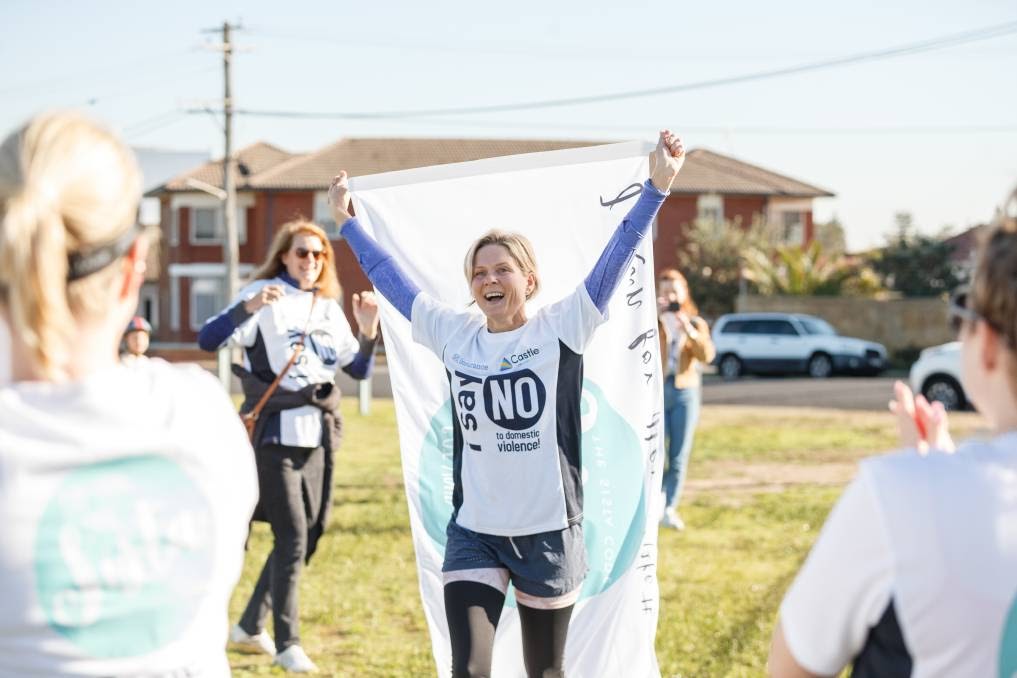
In 2020 I ran my first half marathon. It took 9 months of training, where I’d run 3-5 times per week, almost always early in the morning and always on my own. I’d committed to doing the run for the Got Your Back Sista “I Run for Her” fundraising campaign against domestic violence, so I was highly motivated to train and be in the best fitness position possible to complete the 21km run.
When I finished the run in July, I stopped training. I’m not a natural runner, I didn’t enjoy the training much and with the charity campaign complete I saw no reason to continue putting my body under the stress of pounding the pavement, particularly as the August mornings seemed so cold and uninviting.
But I very quickly noticed that, without the running, my anxiety had returned.
I’d been suffering constant anxiety for about 2-3 years. Certain factors in my life – specifically juggling parenting, working and relationships – had reached a point where I constantly felt on edge, prone to panic attacks and seriously concerned about the long term impact on my health.
I’d become accustomed to the frequent visitor of anxiety in my belly or my chest, which would sometimes stay for days on end. I attempted to manage it with medication, meditation, diet and sporadic counselling, but just as I felt it was under control, an event would happen and I would spiral out again.
A few months into my running training I noticed the anxiety didn’t visit as often. Days would go by and I would realise I hadn’t felt jittery or irritated or hadn’t wanted to bite someone’s head off in the supermarket.
Strange, I thought.
Maybe it’s the running?
The exercise appeared to have been some kind of circuit breaker to the anxiety. And when I stopped, the anxiety returned.
I started running again not to keep the anxiety at bay – strangely that’s not a strong enough motivator for me to exercise regularly – but because I committed to doing another half marathon this year for Got Your Back Sista.
One day recently, I nearly didn’t run, but that commitment to the charity forced me out of bed and into the cool, dark morning.
Earlier, I’d woken up in the middle of a panic attack, having dreamed about a friend who recently passed away. My stomach was churning and my head started buzzing with worries about the day – helping my son navigate year 8 and make good choices, work decisions I felt unsure about, was I doing enough as a leader to inspire my people to be their best, I should have done more at that conference I went to recently – over and over again this stupid chatter played out in my head and my guts.
Up I got and started with a slow jog, my “I can run 21” Spotify playlist in my ears, trying to drown out the incessant chatter.
A few kilometres in, I was running by the beach. The ocean was smooth and I spotted a couple of dolphins, quite close to shore. Magic! I love dolphins (not in a “tattoo them on my ankle” kind of way, just in a peaceful, connected to nature way). My mood lifted and, as I was running uphill, I felt motivated to push on a bit harder.
Then I noticed my belly wasn’t churning any more. I actually felt good in the guts. But the fluttering was still in my chest, that nervous ache that makes me feel like my heart is actually hurting. So I figured I should just keep running until I felt better. I was nearing the end of my 5km run. My playlist was at “Don’t stop til you get enough” by Michael Jackson. Had I had enough? Had I outrun the anxiety? The answer was yes. My body had processed the anxiety. I’d had some ideas (birthday gift for a friend, options for novel ways to connect with my son, perspective on the dream of my friend just being part of the cycle of grief..) and the chatter had quieted.
There’s lots of science to support the link between regular vigorous exercise and reduced mental illness. I won’t bore you with it here, because you can easily google it like I did.
I wanted to instead share my direct experience.
My friend AJ once told me it’s impossible to exercise and have a panic attack at the same time. Well, I nearly proved her wrong once, running and listening to this heartbreaking Maggie Rogers song called “leave a light on” and thinking about my eldest son and the worry I had for him. I had a lump in my throat, I felt like I couldn’t breath, tears were burning my eyeballs and my heart hurt. It hurt so much.
I started sobbing whilst I was running, but then I started thinking “do I stop and sob, or run and sob, or just run? AJ, you were so wrong about this anxiety/exercise link”. If I’d seen a friend at that point (6am on a deserted suburban street, not likely) I’d have collapsed in a heap. But about a minute later I realised I’d stopped crying and instead was thinking about other things – like how wrong I thought AJ was. Which she wasn’t. And neither is the science, apparently. I’d exercised away my anxiety.
To be less dramatic about it, any day I do exercise I feel better. Specifically less anxious or prone to depression or negative chatter. If I do it first thing in the morning it’s even better. If I also do it in the afternoon its a more effective wind down after work or dinner than a wine (most days).
I wanted to let you know this, because if you have a similar experience with anxiety or other mental health challenges, this might help you. Maybe you can relate as this is part of your mental health management, or maybe this is something you’re open to exploring, particularly if you’re not currently exercising regularly.
It doesn’t have to be running, it just has to be vigorous. Enough to get your heart pumping and your head focussed on other things.
I still cry sometimes when I run, and the exercise doesn’t completely clear my heart and head of their negative chatter. I have to augment exercise with other strategies such as meditation, journalling, breath work.
But in my experience running as a form of exercise heals my heart and when I stopped running, I was heading to a very unpleasant place with the anxiety.
I felt compelled to share this experience with you.
Thank you for being here with me. I hope this has been helpful.
To learn more about anxiety and depression, and how you can get help, take yourself off to Beyond Blue or your health professional.
 the-well-club.com
Keep going! Don’t stop like I did! You got it!
LikeLike
I needed to hear this today, thank you so much!
LikeLiked by 1 person